AI products rely heavily on email – from sign-up and verification flows to agent-generated summaries, alerts, and billing communication. As AI adoption accelerates, not every legacy email provider can keep up with the speed, reliability, and automation that AI-driven products need. In this article we walk you through the best email platforms for AI apps in 2026, with clear pros and cons for each.
Quick overview of email platforms for AI
Before diving into detailed pros and cons, here's an overview of how the main email platforms for AI apps compare side by side.
| Provider | Best for AI products | Key pros | Key cons |
|---|---|---|---|
| Sidemail | Most AI SaaS apps that want one simple platform for all emails |
|
|
| SendGrid | High‑volume and enterprise teams, especially already on Twilio |
|
|
| Mailgun | Developer‑heavy teams that want granular control and testing tools |
|
|
| AgentMail | Agent‑centric products where each AI agent needs its own inbox |
|
|
| Amazon SES | Very technical teams at large scale that want lowest raw email cost |
|
|
Key criteria when choosing an email platform for AI
- Deliverability and reliability – robust infrastructure, domain reputation tooling, and best-practice guidance matter for inbox placement.
- Developer experience (DX) – clear docs, simple authentication, straightforward SDKs, and predictable APIs reduce integration time and errors.
- All‑in‑one vs. fragmented stack – some services handle only transactional email, forcing you to add a separate marketing platform for onboarding and lifecycle workflows.
- Observability – logs, webhooks, and analytics help you debug both prompt failures and delivery issues.
- Pricing and scaling – transparent plans that scale with volume and features, without surprise add‑ons, are easier to model into your unit economics.
1. Sidemail – Best all-in-one email platform for AI apps
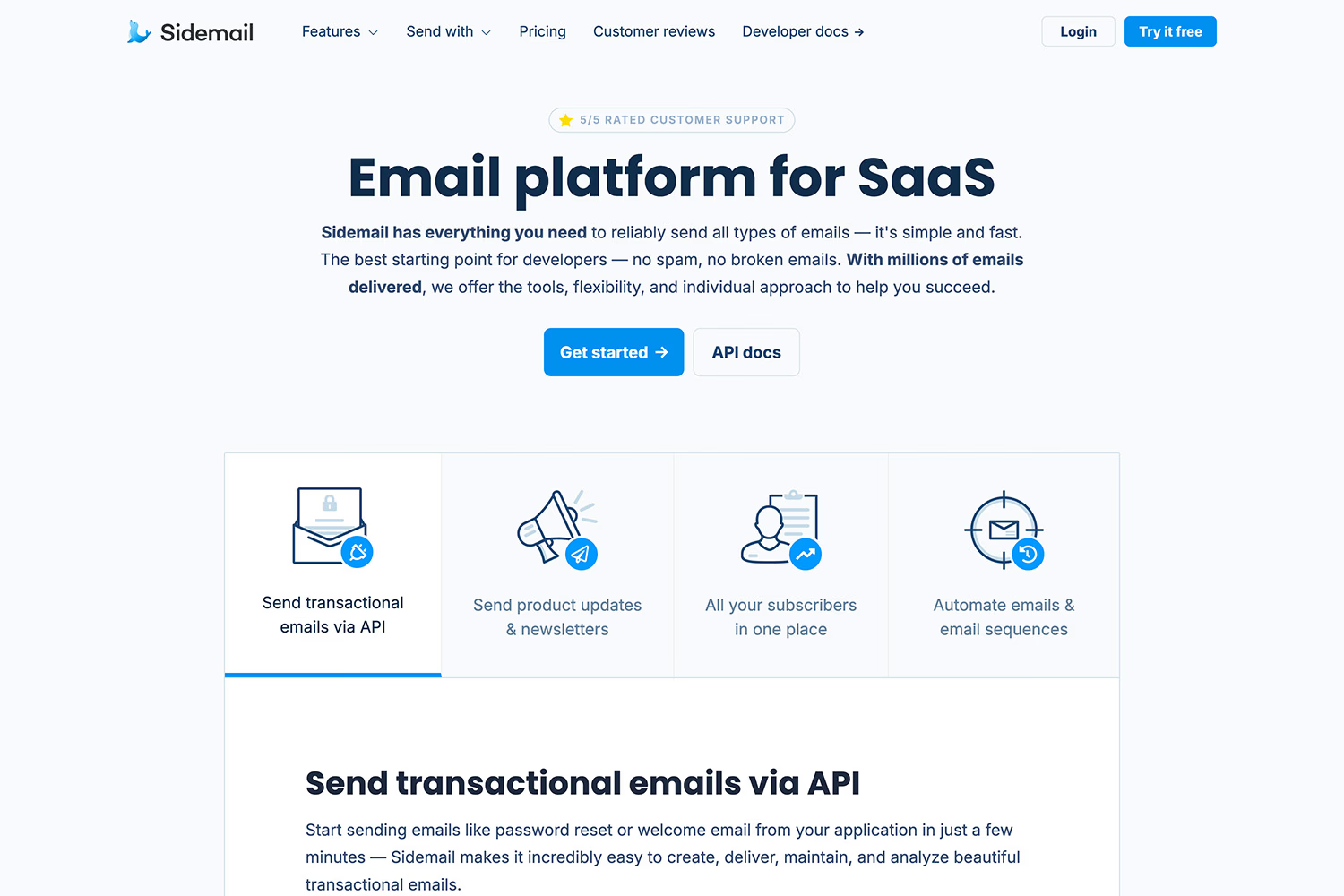
Sidemail is an all‑in‑one email delivery service built with SaaS products in mind, which maps very naturally to many AI tools and applications. The same platform handles transactional emails, newsletters, marketing campaigns, automation, contact profiles, and subscribe forms in one place.
Best for
-
AI and SaaS products that want one email platform for transactional emails (like login links, notifications, password reset emails, etc.), email automation (for onboarding flows, churn management, etc.) and product updates and newsletters.
-
Teams that prefer a clean UI and a focused feature set instead of an overly broad enterprise tool.
👍 Sidemail Pros
-
Truly all‑in‑one platform – transactional sending, newsletters, and automation are all in one product and all-included plan.
-
Fast, reliable delivery for critical emails – Sidemail is designed for transactional workloads like login links, verification codes, and system alerts with fastest and reliable email delivery.
-
Simple integration and intuitive UI – clear instructions and a neat dashboard, most users complete the integration under 30 minutes.
-
SaaS‑first approach – email templates, default setups, and documentation are built around typical app workflows such as sign‑up, verification, passwordless login, and onboarding, which AI apps also rely on.
-
Visual template editor with premade templates – ready-made email templates that work across clients and dark mode save time for AI teams that do not want to hand‑code emails.
-
Automation and lifecycle flows built‑in – welcome sequences, feature education campaigns, upgrade nudges, and reactivation flows can all run inside Sidemail.
-
Straightforward pricing – plans are determined by email volume, with all key functionality included, no hidden or extra fees.
-
GDPR compliant and EU-based team
-
Hands‑on support and pro‑customer approach – Sidemail emphasises personal, responsive support.
👎 Sidemail Cons
-
No permanent free plan – instead of a free tier, Sidemail offers a time‑limited trial so it can focus on reliability and support quality.
-
Focused scope – it intentionally does not try to become a huge marketing cloud, teams that want extremely advanced, marketing-only features may still combine it with specialised tools.
2. SendGrid – Feature‑rich for high‑volume and enterprise
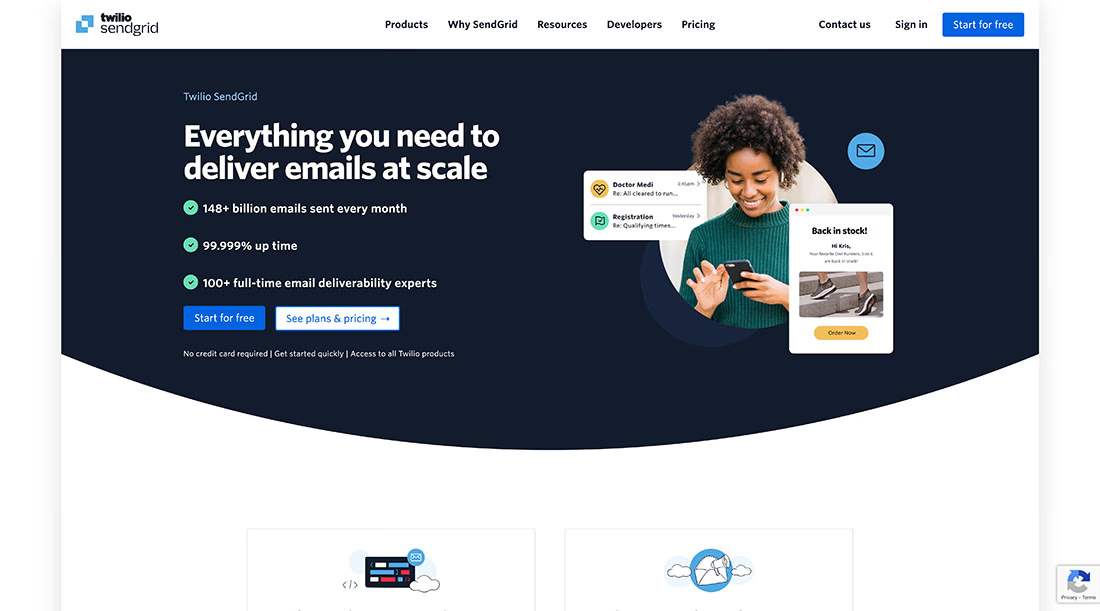
SendGrid is one of the longest‑running email platforms and is now part of Twilio, with a broad feature surface across transactional email, marketing campaigns, and multi‑channel messaging. It is widely used by large companies but has developed mixed reviews among medium and smaller teams in recent years.
Best for
-
High‑volume senders that already standardise on Twilio/SendGrid across teams.
-
Enterprises that need many features, compliance options, and integrations under one umbrella.
👍 SendGrid Pros
-
Very mature and widely adopted – one of the oldest and largest email delivery platforms, recognised and used by many big brands.
-
Advanced testing and analytics – tools for detailed engagement tracking, A/B testing, and reporting appeal to marketing and growth teams.
-
Rich ecosystem and integrations – many third‑party tools, libraries, and guides exist around SendGrid, which can help in complex stacks.
-
Broader communication channels – access to other Twilio products such as SMS and WhatsApp.
👎 SendGrid Cons
-
Deliverability and support complaints – since the Twilio acquisition there has been a visible rise in user reports about inconsistent deliverability and unhelpful support.
-
Two separate products to manage – transactional email and marketing/automation live in different plans, making billing and configuration more complex.
-
Short default data history – only a few days of sending history on lower‑tier plans unless you upgrade.
-
Team members and features locked behind higher tiers – more users and key capabilities often require upgrading to expensive plans.
-
Complicated pricing with add‑ons – many useful features come as paid extras, which can make SendGrid noticeably more expensive.
3. Mailgun – Developer‑centric infrastructure with more control
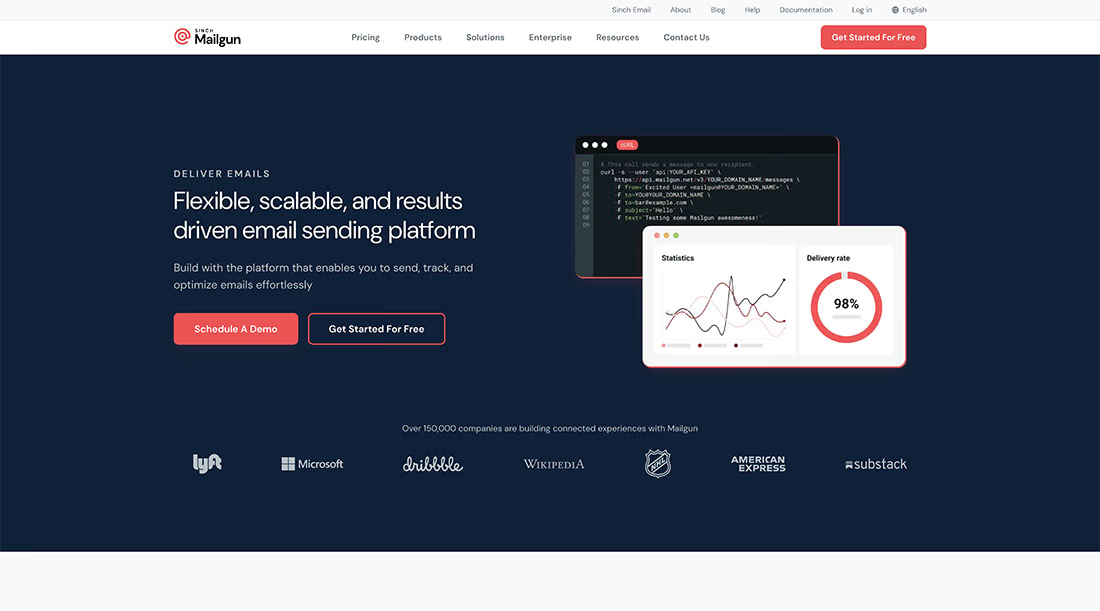
Mailgun is an API‑first email delivery service that has traditionally appealed to developers and infrastructure‑heavy teams. It focuses on transactional emails and technical tooling, while email marketing and automation are handled by a separate service, Mailjet, under the same parent company.
Best for
-
AI teams with strong in‑house email expertise that want to tune infrastructure and deliverability themselves.
-
Products that need detailed testing, routing, and inbound email handling.
👍 Mailgun Pros
-
Solid transactional email capabilities – strong core for sending, receiving, and tracking transactional traffic.
-
Pay‑as‑you‑go and monthly plans.
-
Tools for validation and testing – features like address validation, logs, and testing tools help when building more complex flows.
👎 Mailgun Cons
-
Uncertain deliverability for some senders – a noticeable subset of users report issues with delivery speed and inbox placement, even if not as frequently as with SendGrid.
-
Split stack for marketing – to get full marketing and automation features you need Mailjet or another provider, meaning two plans, two UIs, and two support teams.
-
Short message retention by default – stored messages are only kept briefly unless upgraded, which can be limiting for debugging.
-
Higher learning curve – configuration and integration can feel complex for less experienced teams.
4. AgentMail – Specialized inbox API for AI agents
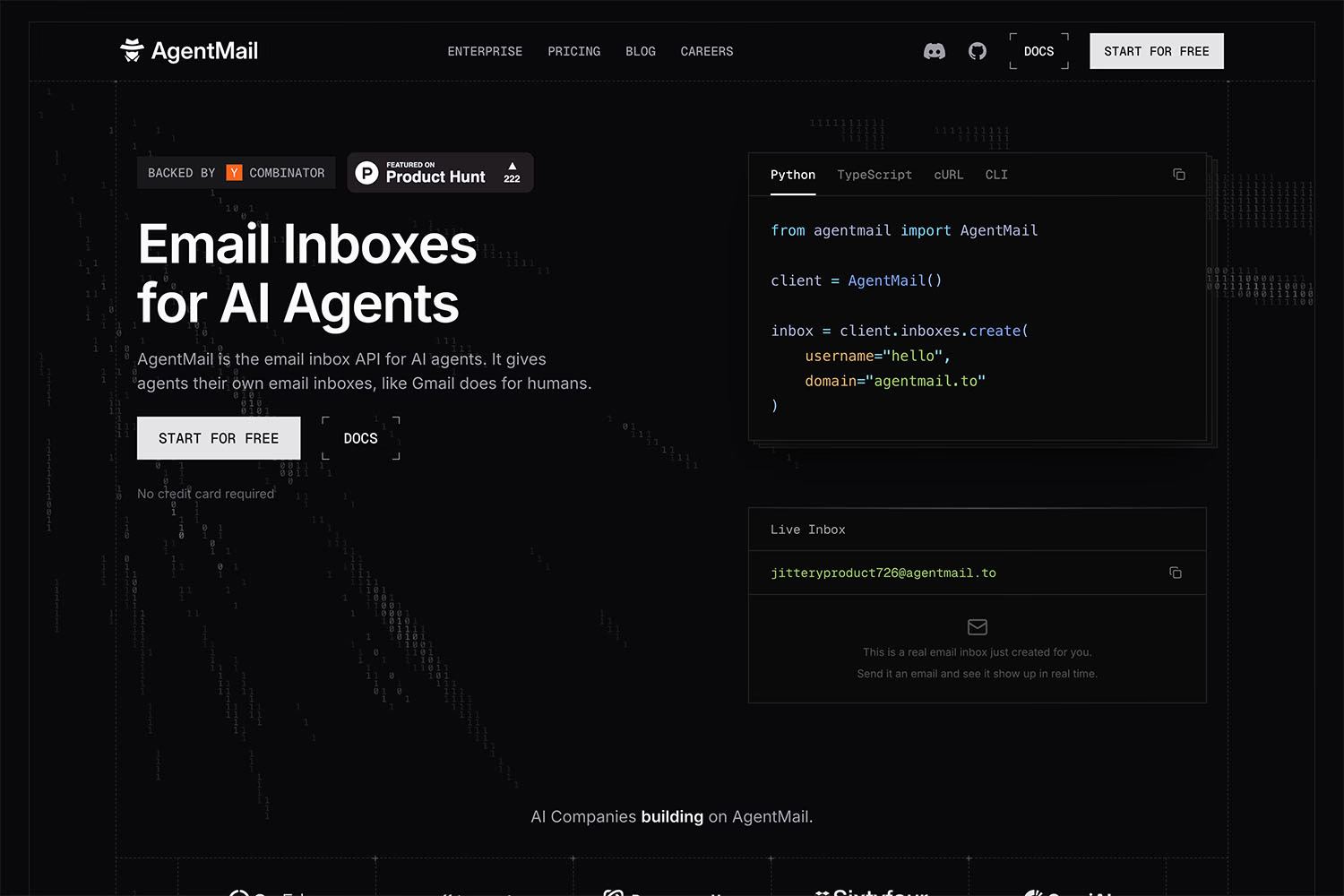
AgentMail is built specifically for AI agents that need their own inboxes and full two‑way email conversations via an API. It treats email inboxes, threads, and labels as first‑class objects that agents can read, reason about, and reply to.
Best for
-
AI products where each agent needs its own inbox and deep thread awareness.
-
Use cases such as AI assistants handling customer support or sales replies directly in email.
👍 AgentMail Pros
-
Agent‑centric model – the core abstraction is an inbox with threads and labels, which fits naturally with LLM and agent workflows.
-
Two‑way conversations by design – agents can not only send but also read and reply to existing threads via API, making complex workflows easier.
-
Built‑in organisation tools – concepts like labels and folders help agents filter and prioritise messages.
👎 AgentMail Cons
-
Not an all‑in‑one email platform – AgentMail does not aim to replace a full transactional and marketing provider; it is an inbox API first.
-
Best as a complement to something like Sidemail – many teams will still want a dedicated delivery platform for sign‑ups, notifications, and lifecycle campaigns.
-
Newer, smaller ecosystem – fewer tutorials, examples, and third‑party integrations compared with long‑standing providers.
5. Amazon SES – Low‑level email infrastructure for teams that build everything
Amazon Simple Email Service (SES) is a very low‑level email infrastructure product from AWS. It is extremely cost‑effective at scale but assumes that engineering teams will build their own templates, analytics, and automation on top.
Best for
-
Highly technical teams already deep into AWS who are comfortable building their own email tooling.
-
AI products at very high volume where cost per email is the dominant concern and there is bandwidth to maintain custom infrastructure.
👍 Amazon SES Pros
-
Among the cheapest options by raw email cost – SES is often the lowest‑priced way to send large volumes of mail.
-
Strong infrastructure and performance – trusted by large companies for reliability and throughput.
-
Fine‑grained control – teams can design exactly the templating, logging, and routing systems they need on top of SES.
👎 Amazon SES Cons
-
Do‑it‑yourself product – SES provides the sending pipe, but template editors, analytics, message history, and automations are up to you or third‑party tools.
-
No built‑in marketing automation – welcome sequences, newsletters, and lifecycle campaigns must be implemented outside SES.
-
Higher operational overhead – ongoing engineering time is required to maintain, monitor, and evolve your email stack.
How to choose email platform for AI products
Choosing the right email platform becomes easier when you align it with how your AI product works and how much infrastructure you want to own.
-
Most AI SaaS products – start with Sidemail. You get transactional, marketing, and email automation in one place, with a UI that is easy to navigate, and fast and reliable email delivery.
-
Large enterprises with existing tooling – consider SendGrid or Mailgun if your organisation already standardises on them and you can handle the extra complexity and add‑ons.
-
Agent‑centric products – pair Sidemail (for user‑facing transactional and lifecycle email) with AgentMail if agents themselves need dedicated inboxes and thread control.
-
Ultra cost‑sensitive, high‑volume workloads – use Amazon SES only if you are prepared to build and maintain your own templates, analytics, and automation.
For many teams, the deciding factor is how much time they want to spend thinking about email. Sidemail's combination of reliable delivery, and all‑in‑one feature set makes it the best starting point for AI products that want to move fast without compromising on user experience or inbox placement.
👉 Try Sidemail today
Dealing with emails and choosing the right email service is not easy. We will help you to simplify it. Create your account now and start sending your emails in under 30 minutes.